Category: <span>Blog</span>

5 Ways to Treat ADD/ADHD (Without Meds!)

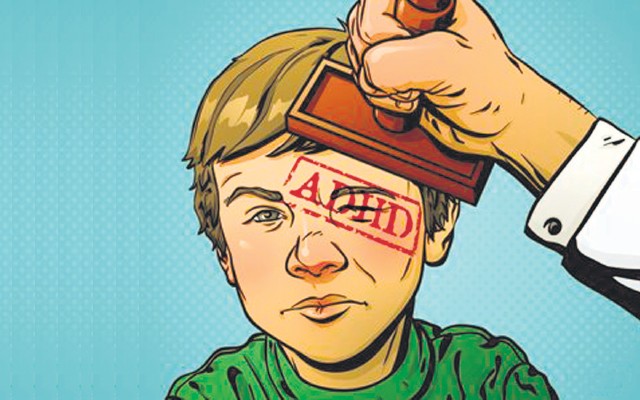
As a pediatric speech language pathologist, I hear the words ADD/ADHD (Attention Deficit Disorder/Attention Deficit and Hyperactivity Disorder) approximately 300 times per day.  In recent years, an ADD/ADHD diagnosis has become quite fashionable, but according to many prominent psychiatrists and researchers, ADD/ADHD is being over-diagnosed, and as a result, many children are over-medicated.


What is Attention Deficit Disorder?

Attention Deficit Disorder (ADD), or its counterpart Attention Deficit Disorder with Hyperactivity (ADHD), is characterized by inattentiveness, hyperactivity, and impulsivity in varying combinations.  You may have seen a child who cannot seem to sit still and who constantly calls out the answers while in class.  You may know adults who lose their keys or cell phones daily and are always late for meetings.  Those with ADD/ADHD have difficulty staying organized, prioritizing assignments, and starting or completing tasks.

Is ADD/ADHD Real?

Attention Deficit Disorder is definitely real.  Although the current method of diagnosis continues to be through checklists that are filled out by parents, teachers, and/or the individual who is suspected to have an attention issue, scientists have begun to use brain imaging studies, such as PET scans and SPECT scans.  These tests look at brain activity while a person is involved in certain tasks, and have demonstrated that certain areas of the brain are more or less active in those with ADD/ADHD than neurotypical peers.  Furthermore, SPECT scans have indicated differences in blood flow to different parts of the brain.

adhd

Treating Executive Function Disorders

Since we know that children with attention disorders lack critical executive functioning skills , such as planning, organization, and task management, a non-pharmaceutical intervention focuses on teaching children (or adults) tools and strategies to overcome these weaknesses.  This type of treatment can be provided by a range of specialists, including speech-language pathologists.  Sessions follow a coaching model and work to empower the student to feel successful in a world that is still learning to deal with ADD/ADHD.

Top 5 Treatment Strategies for Home, School, or the Workplace

1. Checklists

checklist

Unlike their neurotypical peers, those with ADD/ADHD have difficulty breaking tasks down into discrete and manageable steps.  This means that something as simple as getting ready for school becomes an overwhelming chore, which may lead to some early morning arguments.  Make your morning easier by creating a checklist.  For younger children, I pair pictures with words, while older children create their own checklist.  This can then be laminated and completed with a dry erase marker each morning.  Staying with the example of getting ready for school, the checklist may include tasks such as:

get out of bed

brush my teeth

wash my face

brush my hair

change my clothes

eat breakfast

put my folder in my backpack

put on my shoes

leave for school

Checklists can be created for any variety of unmanageable tasks, such as doing homework, preparing for bed, or completing weekend chores.

2. Timer

timer

Using a timer is another great way to ensure that you or your child stay on task to complete assignments.  Because it is so difficult to prioritize and complete assignments, a timer helps to provide a concrete end to a task.  A timer can either be a stand-alone timer, or an app on your phone or iPad.  When using a timer, it is important to set expectations prior to starting.  For example, if using a timer to complete a dreaded writing task, you can state “Let’s work on your writing for 10 minutes. I want you to have at least 3 sentences written in that time. When you are done, you can have a 5 minute break”.  The amount of work time can be modified as the child becomes more comfortable with completing assignments.

3. Fidgets

fidgets

Fidgets are small objects that can be given to a child to help occupy his hands during classroom activities.  Believe it or not, these objects aid with maintaining focus and attention because the child no longer has to try to control his body movements.  Fidgets come in many shapes and sizes, but I prefer to use a Figit for your Digit, which is like a small ring that can provide sensory feedback while not being a distraction to the rest of the class.  When using a fidget, its purpose should be clearly explained to the child and first used at home or in a therapy session to ensure that it does not become too distraction.

4. Yoga/Meditation

yoga-adhd

I have written previously about the benefits of yoga and meditation for speech, language, and attention issues.  The practice is a great way for a child to tune into his body’s movements through breathing, chanting, and asanas (poses), and has been scientifically proven as a successful intervention for attention disorders.  Creating a daily yoga practice for your child can help to provide tools and strategies that can be used throughout the day, by encouraging diaphragmatic breathing (belly breathing) during more difficult or anxiety producing tasks.  In addition, the use of chanting can be a way to organize the brain and prepares it to work most efficiently.  The individual yoga poses are just another way for a child to explore his body and provide the feedback necessary to help the brain and body work together, rather than against each other.  Savasana, or deep meditation, is the final stage of yoga and the way that the body integrates all that it has done through the rest of the yoga practice.

5. Exercise/Movement Breaks

Gone are the days when a child must sit silently in school.  As we begin to learn more about the developing brain, it is clear that children benefit from short movement breaks throughout the day to work more efficiently.  This is even more true for a child with an attention disorder.  Movement breaks can be games, such as Simon Says, dance routines, or a video from GoNoodle (my personal favorite!) Not only do these breaks help a child to reorganize his body, but they also give a physical cue that a transition is about to happen.  Outside of school, involve your child in a sport (tae kwon do, soccer, and swimming are great choices) or exercise program specifically designed for children.

Each child and adult with an attention disorder presents differently.  As a proud member of the tribe, I can say that I work best with checklists, yoga, and exercise, but I have difficulty staying focused when using a fidget.  Find the combination that works best, and make sure to work with your child’s teachers and therapists when creating the plan.

For more information on ADD/ADHD interventions, contact jocelyn.m.wood@gmail.com.

Let’s Play: A Guide to Language in the First Year

During the first year of life, your new baby will take the journey that brings him from a crying ball of mush to his first words.  It is exciting, breathtaking…and nerve-racking as you ponder whether all this is normal.  As part of my new parenting series, I present to you the speech and language milestones and expectations for your baby’s first year.  I have also included activities that you can incorporate to maximize your child’s development at that stage.

The author and her cousin


The First Three Months

When you first bring your child home, you’ll get to go through the process of getting to know each other.  You will begin to discover the meaning behind each cry and will gradually adjust to your sleepless nights.  Before you know it, your baby will be smiling at the sound of your voice and making cooing sounds.  By 3 months, your child should be:

        • startling to loud sounds
        • smiling when spoken to or seeing you
        • making cooing sounds
        • recognizing your voice
        • varying cries

It is important to spend plenty of time bonding with your new baby during these early months and many of these early milestones can be achieved during simple daily activities, such as mealtime, bath time, and cuddling time. In addition, you can also incorporate:

Months 4-6

By this time, you are beginning to think this parenting thing isn’t so difficult.  Likely, you are sleeping better and you and your family have settled into life’s new routines.  You’ll begin to notice that your baby’s eyes brighten when he sees you and he is beginning to communicate with open vowel sounds, such as “aaaa” and “oooo”.  By 6 months, your child should be:

Continue playing with your child and building off of the activities  that have become a part of your daily routine.  For example, stand across the room or behind your child and have them turn towards the rattle or your voice or respond to babbling with a longer string (if baby says “ba” you say “baba”).  Toys for this age include:

7 months-1 year

You made it! This parenting thing isn’t so difficult, after all.  Development builds off the previous stage, so just follow your child’s natural progression and soon you will hear his first words.  By a child’s first birthday, he should:

        • enjoy games like peek-a-boo
        • recognize words for common items
        • babble with long and short sounds
        • imitate different speech sounds
        • begin to respond to requests (give me ball)
        • has 1-2 words

To encourage your child to speak, it is important that you continue to have eye contact and engage in playful language games with your child.  Label things throughout your environment and have your child request what he wants, either by using a gesture or a vocalization—not crying.  Games and toys for this age can include:

Further Reading

For more information on this topic, check out Baby Talk and The 30 Million Words Project.

Contact me for a free phone consultation regarding your child’s development.

Spotlight on Gowanus Treehouse

I have written previously about the importance of collaboration and a multi-disciplinary team.  Recently, I had the pleasure of visiting the Gowanus Treehouse in Gowanus, Brooklyn, where integrative treatment is key.

Gowanus Treehouse was started by Cathy Reid, an occupational therapist who specializes in pediatrics.  She currently serves as the director of services, and is joined by 6 other skilled occupational therapists.  In addition, there is a physical therapist on site who specializes in infant and toddler development.

gowanus treehouse


The space itself is welcoming and bright.  Visitors are invited into a waiting room with warm lighting. The space opens to a playspace that offers ziplining, a rock wall, ladders, and a treehouse, as the name would imply.  Children are guided through these activities to address motor planning, coordination, endurance, and social skills.


I immediately fell in love with the space and the staff, and knew that their philosophy of using a team based approach to treat children matched perfectly with my own.  As of September, I will be offering Yoga for the Special Child and feeding evaluations in conjunction with Gowanus Treehouse.  I hope to see you there!

Gowanus Treehouse is located at 540 President Street, Suite 1E, Brooklyn, NY 11215 or visit them at www.gowanustreehouse.com.

A Guide to Feeding: 0-12 Months

It is an exciting time in the lives of so many of my close friends, and they have each come to me with their most pressing and daunting questions before they become parents for the first time. This month, I will be focusing on the speech, language, and feeding development of children through the first year of life. Breastfeeding_a_baby

People are always shocked when I tell them I specialize in speech therapy with babies.  “But they don’t speak yet! How can they get speech therapy?”  These first months are some of the most important in your child’s life and will set the stage for future development.  Even if your child is typically developing, these tips will help you ensure your child is on the right track. In today’s post, I am going to talk about the most vital of all behaviors—feeding.

1.To Breastfeed or Bottle Feed?

The most logical first question you will have when presented with your new bundle of joy is “How am I going to feed this thing?” Likely, you have put some thought into this before you’ve given birth. You’ve done your research, read articles, and interviewed your mommy friends.  Of course, this is a personal decision and based on many factors, but I always suggest that new moms breastfeed.  During these first few months of life, breastfeeding is an incredibly special way to create a bond between mother and child.  Breastfeeding allows a mother to pass immunity against illness and disease to her child, fills the nursing mother’s body with helpful oxytocin to heal the body post-delivery, and creates a “conversation” between mother and child as you begin to learn your child’s unique hunger cries and develop joint attention. 

The-Breastfed-Baby-Poster-by-the-Alpha-Parent

If you have opted to bottle feed your newborn, I would still recommend using breast milk to take advantage of all the health benefits listed above. There are many bottle options to choose from, but my personal favorite is the Dr. Brown Bottle.  There is also a wide range of nipples to choose from.  Unless your child is having feeding difficulties, I recommend to stick with a standard nipple, rather than a slow flow or preemie nipple.

For those moms who have to return to work, it is important to trial bottles for your infant before your return.  It is going to be a big transition for the whole family, so it is important to be prepared. 

2. I Want to Give Up!

breastfeed superhero

Breastfeeding can be difficult, especially for first time moms.  In those first few days when you and your baby are learning this new dance, it can be very easy to give up.  During this time, it is helpful to have the support of your partner, but also the support of moms going through something similar.  Check for local La Leche League meetings  or join a parenting support group, such as Nurture.

It is important to contact a lactation consultant and/or speech language pathologist if you are experiencing any of the following problems during breastfeeding.

            • difficulty latching
            • inefficient seal
            • decrease in milk supply
            • pain during breastfeeding
            • sores around the nipple
            • thrush
            • infant weight loss
            • gassiness
            • reflux

Read Kristi’s story about her own breastfeeding journey. 

3. Transitioning to the Spoon

Parents can begin to safely introduce solid foods to their child around 6-7 months.  Some pediatricians may urge you to introduce cereals early, but this is not necessarily developmentally appropriate.  If introduced sooner than your child is ready, spoon feeding can  lead to gagging and later food aversions.

Because your child has only had experience with nipple/breast feeding up until this point, it is important to introduce the concept of spoon feeding—just as you would introduce any new behavior.  To do this, start with a spoon that has a small bowl and a long handle such as the one made by Spuni  or Oxo.

After you have chosen the spoon, get comfortable.  Follow these tips to make the transition as smooth as possible.high chair

          • Make sure you child is positioned appropriately in a high chair  and facing you. 
          • Make plenty of eye contact and say “ahhh” as you bring the spoon close to the child’s mouth.
          • Always present the spoon towards the front of the child’s mouth, and have the tip touch the bottom lip so that your baby will automatically close his mouth. 
          • Stop the spoon when it is just past the lips and model “Ma” sound so that your child can clear the spoon.
          • Pull the spoon out while continuing to say “ma”, allowing the child to get all food off the spoon.
          • Repeat as needed.

4. What’s the deal with “Baby-Led Weaning”?

Likely in your research, you have stumbled upon the term “baby-led weaning”.  This means that you will bypass spoon feeding and will allow your child to feed himself using suitably sized pieces of food.  Using this method, there is no need for purees, rice cereals, or baby foods.  Your child will be eating the same foods that you and your family enjoy (with some limitations—of course you are not giving your 6 month old a piece of steak!).  Many parents begin with softer fruits and vegetables (i.e. banana, avocado, strawberries) before transitioning to foods that are more difficult to gum and swallow.  If you are thinking of introducing baby-led weaning with your child, I urge you to read the book for a step-by-step guide.

5. Babies Can’t Use a Cup!

It is hard to believe, but the easiest time to transition your child away from a bottle is when they are 6-7 months old.  At this time, your child does not yet have any teeth, and he can quickly learn to modify his suckle reflex for cup drinking.  Even better, your 6-7 month child is only just developing cause and effect relationships, so he will not be purposefully dumping the cup over to get your attention.  I recommend starting with an Oxo training cup or the Munchkin Tumbler  which both have a small insert that prevents all the water from spilling out of the cup.  By using this set-up, your child can learn to modify the flow of liquid so that you can soon take the insert out and amaze your friends by showing them that your 7 month old can drink independently from an open cup.  As an added bonus, you never have to go through the torture of cleaning those tiny holes in a sippy cup. 

5 Reasons Why Your Child Needs Yoga

credit paper moon/flickr creative commons

As a long-time yoga practitioner, I jumped at the opportunity to begin studying with Sonia Sumar, the creator of Yoga for the Special Child.  Through her experiences with her own daughter, who was born with Down Syndrome, Sonia designed a Hatha Yoga program that was modified to meet the needs of children with a wide variety of speech, language and learning disorders, as well as those with physical disabilities and genetic disorders.  She has shaped this practice over the past 40 years, and I have had the pleasure of training with her over the past two years. So, why do I think that yoga is the perfect supplement for a speech and language program?

1.Chanting Stimulates the Brain

In a traditional Hatha yoga program, the practice begins with chanting.  Chanting is the rhythmic repetition of words, such as “Hari Om”, which means “the removal of suffering”.  From a speech and language perspective, these sounds are easy for a child to repeat and fill the body with vibrations.  In yoga, chanting is paired with clapping or body movements to create a multi-sensory connection.  These body movements help a child to organize his brain for the movements that are to come.  Studies have shown that this pairing of auditory, visual, and kinesthetic (i.e. body movement) feedback can aid a child with motor learning difficulties to begin to make vocalizations and words.  Continued practice of the rhythms and chanting will also lead to greater awareness of patterns and increased vocalizations from the internal feedback the child receives from chanting. 

Another advantage of chanting is that it leads to greater relaxation.  Limited speech production or difficulty in school can be anxiety producing for a child.  By modifying the rhythms of the chant, a trained yoga practitioner can help your child find an internal calm that will carry through the next day, or longer! 

2. Breathing is the Key

Breathing is the basis of all human function—but most people are doing it wrong! Many people are accustomed to short, shallow breaths that can lead to increased anxiety and hyperactivity.  By learning to activate diaphragmatic breathing, children (and their parents) will experience a release in muscle tension, increased oxygen to the cells and organs, and greater concentration. From a speech-language pathologist’s perspective, proper breath support is also the basis for speaking.  A child must be able to produce appropriate air flow to make any sounds or vocalizations, and well controlled breathing will help to maintain appropriate vocal volume (i.e. that perfect medium between whispering and shouting). 

Breathing is incorporated throughout the yoga practice by having a child pair their breath with body movements.  When a child is ready, the yoga practitioner can help to incorporate pranayama, or breathing exercises, which further detoxify and center the child.  Parents have even reported a decrease in seizure activity by consistently practicing pranayama breathing. 

3. Holy Corpus Callosum!

The corpus callosum is a strip of nerve fibers that connect the right and left hemisphere of the brain.  It is responsible for sending messages from the left brain (language dominant side) to the right brain (motor learning side) and vice-a-versa.  In children who have learning disabilities, motor planning issues, or genetic disorders, the corpus callosum is believed to be weakened, or in some cases, nonexistent

Right and Left Brain

By combining body movements with breathing and chanting, yoga helps to strengthen the corpus callosum.  In a yoga program, the practitioner is able to develop this area of the brain by using predictable, yet varied, patterns of movement.  For example, every session begins clapping and mudras, or hand movements, but the rhythm and sequence of these movements change from session to session.  Furthermore, the repetition of the same asanas, or body movements, from session to session can lead to better integration of the left and right brain. This increase in density, or thickness, of the corpus callosum can lead to an enhanced ability to follow directions, increased verbal output, and greater attention to the environment.

4. Turn Your Body Inside Out

When most people think of yoga, the first thing that comes to mind is a series of poses, also known as asanas.  In a Hatha yoga practice, body movements are chosen to ensure proper body alignment.  The practitioner will choose movements that will gracefully move your child through forward, backward, and lateral movements while seated, standing, supine (lying face up), and prone (lying face down).  By working the body through a complete range of motion, yoga has the ability to organize a very disorganized system. When the brain no longer has to make accommodations for our sensory profile, language can flow much more freely.  After practicing yoga, the body is functioning optimally, and children no longer have to tune into themselves to make adjustments and “fit” into the world around them.  Rather, they can now focus their energy outwards to have conversations with those around them.  This could mean greater eye contact, increased confidence in putting words together, or improved conversation with family and peers.

5. Creating Routines

All humans thrive on routine.  Although the individual movements may vary from session to session, the components of each class remain the same.  Yoga is a daily practice that can be easily incorporated into your family’s life and over time, you will see many significant changes in both your child and yourself.  As a child becomes more comfortable with the yoga practitioner and the individual movements, he will be able to open up and take more risks, both on the yoga mat and throughout the day.

Beginning in September, I will be offering individual Yoga for the Special Child sessions in Gowanus and Ditmas Park, Brooklyn.  Contact jocelyn.m.wood@gmail.com for more info or visit www.jocelynmwood.com.

The OT-Speech Connection

The longer I work as a speech language pathologist, the more I appreciate my work with occupational therapists.  I checked in with my friend Jill Loftus at Honest OT in Denver, Colorado, to find out How Sensory Processing Impacts Speech Development.

Photo via PROLoren Kerns via Flickr Creative Commons

It’s important to realize that the vestibular and auditory systems work together as they process sensations of movement and sound. These sensations are closely intertwined, because they both begin to be processed in the receptors of the ear.

Audition, or hearing, is the ability to receive sounds. We are born with this basic skill. The ability to hear does not guarantee, however, that we understand sounds. We learn about comprehension as we integrate vestibular sensation. Gradually, as we interact purposefully with our environment, we learn to interpret what we hear and to develop mature auditory processing skills.

Language is understanding what words mean and how we use them to communicate. Receptive language is language which we take in by listening and reading. Expressive language is what we put out by speaking or writing. Language and speech are closely related, but they are not the same. Speech is the physical production of sound. Speech skills depend on smoothly functioning muscles in the throat tongue, lips, and jaw.

The vestibular system impacts motor control and motor planning that are necessary to produce intelligible speech. Because the vestibular system is crucial for effective auditory processing, the child with vestibular dysfunction frequently develops problems with language.

How do these problems play out? Here are some common characteristics of children with poor auditory-language processing:

  • May seem unaware of the source of sound and may look all around to locate where the sounds come form.
  • May have trouble identifying voices or discriminating between sounds, such as the difference between “bear” and “bore.”
  • May be unable to pay attention to one voice or sound without being distracted by other sounds.
  • May be distressed by noises that are loud, sudden, metallic, or high – pitched, or by sounds that don’t bother others.
  • May have trouble attending to, understanding, or remembering what she reads or hears.
  • May misinterpret requests, frequently ask for repetition, and be able to follow only one or two instructions in sequence.
  • May look to others before responding.
  • May have trouble putting thoughts into spoken or written words.
  • May talk “off topic,” e.g. talk about his/her new shirt when others are discussing a soccer game.
  • May have trouble “closing circles of communication,” i.e. responding to others’ questions and comments.
  • May have trouble correcting or revising what he has said to be understood.
  • May have weak vocabulary and use immature sentence structure (poor grammar and syntax).
  • May have difficulty with reading (dyslexia), especially out loud.
  • May have trouble making up rhymes and singing in tune.
  • May have difficulty speaking and articulating clearly.
  • May improve her speaking ability after she experiences intensemovement.

Physical Activities Promote the Ability to Speak

A child with vestibular and language problems benefits greatly from therapy that simultaneously addresses both types of dysfunction. Speech and language therapists report that just putting the child in a swing during treatment can have remarkable results. Occupational therapists have found that when they treat a child for vestibular dysfunction, speech-and-language skills can improve along with balance, movement, and motor planning skills.Jill Loftus, MS, OTR/L is a practicing pediatric occupational therapist and parenting coach focused on enabling and empowering children and families. Her 15 year career working in schools, homes, clinics and the community has spurred her passion for providing child development education in a meaningful and creative way. She provides a variety of services, blogs and a weekly 5 tips newsletter that you can learn more about by visiting honestot.com or follow us on www.facebook.com/HonestOT/

5 Tips for Language Development

Author's mother with the babies

Recently, I returned to my work with the little ones.  There is really no better feeling than figuring out the puzzle pieces of a little one and watching magic happen!  The great thing about early childhood is that once you solve the puzzle, the magic happens so quickly!  If you want to watch your little one’s speech flourish, follow these tips.

Eye contact is key Always place your child in a way that they can see your face and your mouth.  We have a tendency to place children with their backs propped on us, unless we are feeding.  Babies receive lots of social cues and signals from our eyes and focus on our mouth to try to figure out how we do that thing called speaking.  For a child 0-5 months, I like to sit with my knees bent and child leaning and propped between my knees and my thighs.  For children who are beginning to sit independently, I support the back with the heels of my feet while the child is safely supported by the circle of my legs.

Give choices, grow independence Babies need choices and this is the first way that children use language.  Babies learn to gesture toward a desired object at around 8 months old.  From this gesture, they begin to use sounds to indicate their desire, and finally, around 12-14 months, they begin to say the name of the object they actually want.  Aid this natural progression by always placing two objects in front of your little one, so that they can reach toward what they want.

Sharing is caring Turn taking is an often overlooked skill.  Children as young as 9 months can begin to learn my turn/your turn.  You can do this when doing a puzzle with your child and you each have a chance to place a piece.  The same us true for a shape sorter, or even when turning pages in a book.  By developing this skills early on, your child will be an expert by the time he reaches the terrible twos!

Get messy Even as adults, we have sensory issues, but language develops in the optimal environment, and for some children that means making a mess.  Take the time to make play doh and slime with your child, play in bean bins by digging for treasure, and draw pictures in shaving cream on your wall.  Doing these multi-sensory (i.e. involving all the senses) activities with your child will activate many more parts of his brain, leading to increased integration (connectedness).

Devices are over-rated. Talk to me. Don’t get me wrong–I love my iPhone, iPad, iMac…–but children still learn best from speaking.  The 30 Million Word Project has been revisiting Hart & Risley’s 1975 study, indicating that children from lower income homes hear 30 million less words than their upper- middle class peers by the time they reach Kindergarten.  This research shows a clear connection between the amount and diversity of language a child hears and their future success, all the way through high school.  Talk about the things in your environment, respond to your child’s questions, and have realistic conversations.

Have a question regarding early language development?

Sign-up for my newsletter to get more tips like this!

Tongue Tie Mysteries Revealed

Being a new mom is tough! You are getting to know your baby while everyone around you weighs in on what to feed your child, how to care for your child, and how to get your child to sleep.  Now add to this experience the fact that you know something is wrong, but everyone around you insists that you just need to relax.

Meet Kristi, a friend from graduate school and fellow pediatric speech-language pathologist.  Kristi had, like me, received some basic training on tongue and lip ties, but nothing could compare to going through the experience first hand.

Jocelyn: Gush to me about your child. Tell me how things have been going as a new mom.

Kristi: I was born to be a mom. I love being a mom. I was waiting my entire life to have this new identify and child and it’s been amazing. I have been blessed to be home
with him since he was born and I never thought that would have ever been an option. I’m truly in love and every day that love literally grows more and more and I don’t even know how it’s possible!
He’s a complete Gemini like me and he feels very deeply as I do so he’s been a bit tougher than the “average” baby (actually, that’s an understatement) but he  has become easier (at least for me) as he is now more mobile. However, he really matched the profile of a tongue and lip tied infant in terms of temperament resulting from pain and discomfort. He really is my joy, though!
J: Did you breast feed or bottle feed?
K: We have breastfed since he was born. He latched like a champ when he was born and barely let go until he was 6-7 months old. When he was 5 & 6 weeks old he took 3-4 2oz bottles total over those two weeks but once feeding was no longer instinctual (after 6 weeks) and his gag reflex emerged, all abilities to use a bottle stopped as he just gagged on all bottle nipples continuously and would not suck unless on the breast. He also never accepted all 800 pacifiers I tried (but now that he’s 10 months of age, I am excited that he never did! He also never found his thumb).
J. When did you first realize there was a problem?
K: I first saw his tongue tie within moments after he was born or somewhere within the first 2 hours (it was such a blur!) but I knew when I saw him cry that he was tongue tied. My husband has a moderate-severe anterior tongue tie (short lingual frenulum adhered to the tip of his tongue) that was never revised. My husband’s two brothers were also tongue tied but revised as infants. As tongue ties are hereditary, I expected Neil to be tongue tied so I was looking as soon as I met that sweet face and saw him crying. Neil didn’t have the classic anterior tongue tie, like my husband, so I was a bit confused, as I was not as knowledgeable on tongue and lip ties until after I did my research once he was born, as to why he had a very slight v-shaped notch at the tip of his tongue and a dimpling of his tongue just beyond the tip. Later, I saw that his hard palate was a little higher and more narrow than I believed to be typical (but still not even moderate or severely high and narrow). I also didn’t realize initially that when he cried, his tongue tip did not contact his alveolar ridge. Instead, there was a cupping of the tongue as the sides of his tongue cupped up while crying but did not elevate higher than the corners of his mouth. He also was a MARATHON nurser. This took awhile to realize as breastfeed babies frequently feed every 45 min-2 hours (that means if they feed every 45 minutes that it is 45 minutes from the BEGINNING of the first feed) so I knew that frequent breastfeeding was typical, but Neil LIVED on my breasts. The next points are HUGE…
  • DID NOT have ANY pain breastfeeding…EVER!!! (except for 2-3 days of thrush when he was 5 weeks old, also related to his tongue tie but not relevant at the moment) and
  • he DID NOT have ANY difficulty latching!! He only had occasional reflux.
  • He also gained TONS of weight (after losing 7% of his body weight within the first week of his life-up to 10% is normal in breastfed babies-weighing just 1oz more than his birthweight by 10 days old).

Basically, Neil did not LOOK or fit the profile of an infant that had a tongue tie to ANYONE (more on that in the next question). Actually, the IBCLC in the university hospital we ended up having to deliver at due to preeclampsia at 40 week & 6 days told me that I seemed as though I was breastfeeding my 4th child (not my first like he is) based on how well everything looked!

I noticed that Neil’s latch became a bit more shallow than it had been in the hospital and the first weeks at home, but still nothing alarming to me. At 3-4 weeks, I noticed that he often choked upon my letdown which resulted in sputtering the breastmilk and coughing before latching again eagerly and seeming to manage the flow. I heard clicking while he nursed intermittently. He also had a nursing blister on his top lip and an appearance of “chapped lips” occasionally. NURSING BLISTERS ARE NOT NORMAL! Most people including pediatricians tell you that they are normal. They are COMMON (and so are tongue ties), but NOT normal. The biggest indicator of something being wrong was the incessant crying Neil did and the borderline diagnosis of “colic” he was provided. He wasn’t a true “colic” infant as he was easily soothed on the breast (whether that be that sucking was organizing for him, that he needed more time to adequately transfer milk, cluster feeds, or that the reflux he was experiencing was being soothed by the breastmilk which is like an antacid-even though he didn’t have a TON of reflux-I’m not sure which or all of the above). I don’t believe in “colic” and I believe that “colic” is often related to tongue ties and resulting aerophagia that looks like “just” reflux which infants are then overly medicated for. I also think that everything in their entire body becomes much tighter, especially within the head and neck, due to the tethers and that can create it’s own discomfort. It also took me the LONGEST time to realize that the “breastmilk” I heard hitting his tummy while actually AIR!
J: Who did you contact? What did they say?
At the hospital, I spoke to every doctor or intern that I encountered including my midwives, his pediatricians, and even the IBCLC. All told me that he was fine and there wasn’t anything.
I told my breastfeeding friendly pediatrician twice within Neil’s first 2 months that I believed he had a tongue tie and I was told that “notches in the tongue just existed for some people.”
No one seemed to care that I was a SLP or that by 2 months I had done SIGNIFICANT research on the topic. They asked me if I had pain breastfeeding…”no” then looked at his chart to see he was gaining weight VERY well (he was born “off the charts” in weight and length) but he continued to stay that way. I’m not sure if it was true for Neil because he continues to be “off the charts” but MANY breastfed babies with tongue and lip ties gain A LOT of weight because they are just consuming all of the letdown. Hormones play less of a role after 3-4 months when the breastmilk production regulates to meet the needs of the baby determined by how well the baby drains the breast at each feeding. It was also suggested that I have an overactive letdown or forceful letdown. . Babies without tongue and lip ties manage their mothers letdowns without difficulty (choking on the breastmilk at the letdown).
My pediatrician does not know about either revision that Neil had.

J: How did Neil respond to treatment? What changes did you see?

K:My husband swears within the first 3 days he saw a completely different child (it took a little longer for me to see it) but he actually began not just falling asleep at the breast when he was done feeding, but staying awake and popping off! That happened the same day as the revision took place. I was in SHOCK! I heard that babies would do that but Neil had never done that. It was amazing. He became a much happier child.

J: Were you ever told that there wasn’t a problem? How did that make you feel?

K: Yes, but that just energized me to PROVE to myself that I was right. I was right that the tongue and possibly lip tie were causing severe gastric distress resulting in “colic” and needing to breastfeed frequently. He had a moderate-severe posterior/submucousal tongue tie and a moderate lip tie. I am fortunate the hospital did not determine the tie because they would have tried to use scissors only and not have done a complete revision. The tongue and lip tie resulted in Neil having a weak latch and difficulty moving his tongue for adequate and safe milk transfer. He was taking in way too much air at each feeding. At 2.5 months of age I met other mothers who had similar stories. They put me in touch with Dr. Scott Siegel, one of the two preferred providers for oral tethered issues in New York. I was given all of the validation I needed. We had his first revision when he was nearly 3 months old. This was important to me because if he was not adequately transferring the milk out of my breasts that my milk supply could seriously decrease after 3-4 months when Neil became relevant in regulating my breastmilk production and supply.

J: What made you pursue the second surgery?

Baby Neil trying solids

I noticed at 6 months when he began solids that his tongue was not elevating to accept food he was placing in his mouth. As a SLP, I knew it did not look right. I was concerned that their had been reattachment in the healing process even though at our follow up Dr. Siegel said there was not reattachment. We found out he had what they call a tie that was not visible, and  was not evident until after the release of the posterior/submucousal tie. The second revision occurred while Neil was held in my husband’s lap (again he nursed within 5 minutes of the procedure.) This revision was AMAZING to see just how much more Neil’s tongue could move and ELEVATE. I was so happy!

J: Can you describe the tongue tie revision procedure? I know a lot of parents worry about this!

K: The revision itself was simple and quick (less than 2 minutes). He was awake and in his infant bucket seat. A laser was utilized and he wore goggles. He was provided with a topical numbing agent. I know many babies are swaddled if out of their infant bucket seat. Discomfort (or pain) was more from having hands in his mouth for the procedure. I know adults who have had the procedure done and said they did not even feel the laser but had soreness within 6-24 hours after the procedure for a few hours maximum. He breastfed within 15 minutes after calming down (that’s the longest I’ve heard of a baby taking to breastfeed after, most are even sooner than him) in the office. 
J: What is your advice for parents who suspect a tongue or lip tie?
K: My advice is never to listen to a pediatrician about tongue and lip ties (or breastfeeding) as most are not educated enough in this (these) area(s) (or many areas beyond general health and wellness). The general recommendation by a pediatrician will be (if they even suspect or identify tongue and lip ties) to do nothing unless it’s the classic anterior tie with tip restriction incredibly obvious. It is crucial to meet with an internationally board certified lactation consultant (IBCLC) and possibly even more than one IBCLC to find one who is super knowledgeable in tongue and lip ties (not all are). I also believe it is IMPERATIVE to find a preferred provider (specialist) for tongue and lip ties in your state (New York has only two) who will correctly identify and release the tethers via laser instead of scissors which often do not fully release a tie. ENT doctors are also not necessary to see UNLESS they are a preferred provider for tongue ties, as well or are recommended by a preferred provider who believes their education in tethered oral issues is superb.
We hope that by getting the word out there, more parents can identify tongue and lip ties and get the appropriate care for their child.
For more information on tongue and lip tie, contact me or find providers here.

Take that thing out of your mouth!

Our tongue is essential to many of our daily functions, so it’s no surprise that it is the focus of much of our earliest explorations.  Some babies have even been observed to suck their thumb while in their mother’s womb!  In our first months, it is normal to place our fingers, and for a brief time, other objects into our mouth to test out what our mouths our capable of.  New research by University of British Columbia’s School of Audiology and Speech Sciences recently tested the motor theory of speech perception.

What did the study say?

Basically, what this means is that when the tongue is not able to move, it is more difficult to distinguish between speech sounds.  When children were given teething toys, which restrict the tongue tip’s movement, the babies were unable to distinguish between two similar but distinct Hindi-language sounds.  When the teether was removed, the babies were able to make the distinction (ASHA, 2015).

What does that mean for me? 

The message here is not necessarily that you should never give your child a teething toy.  On the other hand, we want to give our babies the most tongue movement possible, so some general guidelines are:

  • limited pacifier usage after 4 months, unless medical feeding issues are present
  • if you think your child has a tongue tie, seek a professional opinion and follow through with recommendations so that tongue tip has free movement
  • eliminate thumb/finger sucking if present after 2 years
  • get rid of bottles by 1 year; switch to an open cup, like the Oxo training cup

Speech Pathologist’s Tip: make sure the sippy cup is used as a transition–not a “forever” cup!

For more tips to help your baby thrive, contact me! I’d love to chat.

Mommy, my ear hurts!

Ear infections are one of the most common ailments of young children.  Unfortunately, babies (birth to two years old) are anatomically at a disadvantage for ear infections, due to their flat eustachian tubes. According to the American Speech-Language Hearing Association (ASHA), children who have more than 2 ear infections before their second birthday should be evaluated by an audiologist.

baby-hearing-protection

What are the causes of ear infections?

It is normal for the inner ear to have a small amount of fluid. This helps us to maintain balance and equilibrium in our environment.  When this fluid becomes infected, however, it can lead to an ear infection.  The most common cause is a virus.  A young child’s anatomy lends to mouth breathing, and many infections enter through the open mouth, where it has direct access to the eustachian tube, and thus the ear.

A second, less familiar, cause of ear infections is reflux.  Many people think of gastroesophageal reflux (GERD), which is that all too familiar feeling of heartburn.  However, laryngopharyngeal reflux (LPR), is actually a much more dangerous condition. When undiagnosed and/or untreated, this condition can be the lead cause of recurrent ear infections.  Basically, what happens, is reflux from the larynx (throat) backs up into the mouth and enters the child’s eustachian tube.  So, you can treat the child with antibiotics, but a few weeks later, the condition will re-occur.

Other possible contributors to ear infections are enlarged tonsils or adenoids, which cause increased mouth breathing and increased chances for exposure to viruses.

Who should I see about ear infections and reflux?

When your child shows the first signs of ear infection, the first stop should always be your pediatrician.  Typically, ear infections are treated with a course of antibiotics and your child will be out of pain within the next 48 hours.

What if ear infections persist?

In the case of recurrent ear infections,  you should find a referral for a pediatric ENT, who is trained to look directly at your child’s throat for signs of reflux.  At this point, the reflux would be treated, and you will hopefully see a reduction in ear infections.

If the ear infections do not resolve, your child may be a candidate for pressure equalizing tubes (PE tubes), which “protect” the ear from future infections.

An often overlooked appointment is with an audiologist.  An audiologist should be seen after each occurrence of ear infection to see if there has been any damage to your child’s hearing mechanism.  The audiologist will not only test hearing acuity (how well your child can hear at different volumes) but will also check for fluid in the ear.

When should you contact a speech-language pathologist?

I liken having an ear infection to listening to someone speaking while your head is underwater.  This can have a profound effect on your child’s language learning abilities at a critical age.  If your child has had 2 or more ear infections before their second birthday, or if you have seen a regression in your child’s speech and language development, you should contact a speech-language pathologist.


Do you have experience with recurrent ear infections, infant reflux, or tube placement? I would love to hear about your experiences. 

5 Ways to Treat ADD/ADHD (Without Meds!)

As a pediatric speech language pathologist, I hear the words ADD/ADHD (Attention Deficit Disorder/Attention Deficit and Hyperactivity …

Let’s Play: A Guide to Language in the First Year

During the first year of life, your new baby will take the journey that brings him from a crying ball of mush to his first …

Spotlight on Gowanus Treehouse

I have written previously about the importance of collaboration and a multi-disciplinary team.  Recently, I had the pleasure …