Category: <span>Uncategorized</span>

5 Ways to Treat ADD/ADHD (Without Meds!)

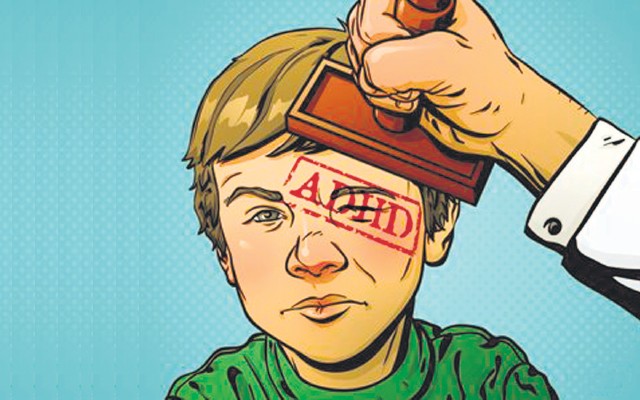
As a pediatric speech language pathologist, I hear the words ADD/ADHD (Attention Deficit Disorder/Attention Deficit and Hyperactivity Disorder) approximately 300 times per day.  In recent years, an ADD/ADHD diagnosis has become quite fashionable, but according to many prominent psychiatrists and researchers, ADD/ADHD is being over-diagnosed, and as a result, many children are over-medicated.


What is Attention Deficit Disorder?

Attention Deficit Disorder (ADD), or its counterpart Attention Deficit Disorder with Hyperactivity (ADHD), is characterized by inattentiveness, hyperactivity, and impulsivity in varying combinations.  You may have seen a child who cannot seem to sit still and who constantly calls out the answers while in class.  You may know adults who lose their keys or cell phones daily and are always late for meetings.  Those with ADD/ADHD have difficulty staying organized, prioritizing assignments, and starting or completing tasks.

Is ADD/ADHD Real?

Attention Deficit Disorder is definitely real.  Although the current method of diagnosis continues to be through checklists that are filled out by parents, teachers, and/or the individual who is suspected to have an attention issue, scientists have begun to use brain imaging studies, such as PET scans and SPECT scans.  These tests look at brain activity while a person is involved in certain tasks, and have demonstrated that certain areas of the brain are more or less active in those with ADD/ADHD than neurotypical peers.  Furthermore, SPECT scans have indicated differences in blood flow to different parts of the brain.

adhd

Treating Executive Function Disorders

Since we know that children with attention disorders lack critical executive functioning skills , such as planning, organization, and task management, a non-pharmaceutical intervention focuses on teaching children (or adults) tools and strategies to overcome these weaknesses.  This type of treatment can be provided by a range of specialists, including speech-language pathologists.  Sessions follow a coaching model and work to empower the student to feel successful in a world that is still learning to deal with ADD/ADHD.

Top 5 Treatment Strategies for Home, School, or the Workplace

1. Checklists

checklist

Unlike their neurotypical peers, those with ADD/ADHD have difficulty breaking tasks down into discrete and manageable steps.  This means that something as simple as getting ready for school becomes an overwhelming chore, which may lead to some early morning arguments.  Make your morning easier by creating a checklist.  For younger children, I pair pictures with words, while older children create their own checklist.  This can then be laminated and completed with a dry erase marker each morning.  Staying with the example of getting ready for school, the checklist may include tasks such as:

get out of bed

brush my teeth

wash my face

brush my hair

change my clothes

eat breakfast

put my folder in my backpack

put on my shoes

leave for school

Checklists can be created for any variety of unmanageable tasks, such as doing homework, preparing for bed, or completing weekend chores.

2. Timer

timer

Using a timer is another great way to ensure that you or your child stay on task to complete assignments.  Because it is so difficult to prioritize and complete assignments, a timer helps to provide a concrete end to a task.  A timer can either be a stand-alone timer, or an app on your phone or iPad.  When using a timer, it is important to set expectations prior to starting.  For example, if using a timer to complete a dreaded writing task, you can state “Let’s work on your writing for 10 minutes. I want you to have at least 3 sentences written in that time. When you are done, you can have a 5 minute break”.  The amount of work time can be modified as the child becomes more comfortable with completing assignments.

3. Fidgets

fidgets

Fidgets are small objects that can be given to a child to help occupy his hands during classroom activities.  Believe it or not, these objects aid with maintaining focus and attention because the child no longer has to try to control his body movements.  Fidgets come in many shapes and sizes, but I prefer to use a Figit for your Digit, which is like a small ring that can provide sensory feedback while not being a distraction to the rest of the class.  When using a fidget, its purpose should be clearly explained to the child and first used at home or in a therapy session to ensure that it does not become too distraction.

4. Yoga/Meditation

yoga-adhd

I have written previously about the benefits of yoga and meditation for speech, language, and attention issues.  The practice is a great way for a child to tune into his body’s movements through breathing, chanting, and asanas (poses), and has been scientifically proven as a successful intervention for attention disorders.  Creating a daily yoga practice for your child can help to provide tools and strategies that can be used throughout the day, by encouraging diaphragmatic breathing (belly breathing) during more difficult or anxiety producing tasks.  In addition, the use of chanting can be a way to organize the brain and prepares it to work most efficiently.  The individual yoga poses are just another way for a child to explore his body and provide the feedback necessary to help the brain and body work together, rather than against each other.  Savasana, or deep meditation, is the final stage of yoga and the way that the body integrates all that it has done through the rest of the yoga practice.

5. Exercise/Movement Breaks

Gone are the days when a child must sit silently in school.  As we begin to learn more about the developing brain, it is clear that children benefit from short movement breaks throughout the day to work more efficiently.  This is even more true for a child with an attention disorder.  Movement breaks can be games, such as Simon Says, dance routines, or a video from GoNoodle (my personal favorite!) Not only do these breaks help a child to reorganize his body, but they also give a physical cue that a transition is about to happen.  Outside of school, involve your child in a sport (tae kwon do, soccer, and swimming are great choices) or exercise program specifically designed for children.

Each child and adult with an attention disorder presents differently.  As a proud member of the tribe, I can say that I work best with checklists, yoga, and exercise, but I have difficulty staying focused when using a fidget.  Find the combination that works best, and make sure to work with your child’s teachers and therapists when creating the plan.

For more information on ADD/ADHD interventions, contact jocelyn.m.wood@gmail.com.

Let’s Play: A Guide to Language in the First Year

During the first year of life, your new baby will take the journey that brings him from a crying ball of mush to his first words.  It is exciting, breathtaking…and nerve-racking as you ponder whether all this is normal.  As part of my new parenting series, I present to you the speech and language milestones and expectations for your baby’s first year.  I have also included activities that you can incorporate to maximize your child’s development at that stage.

The author and her cousin


The First Three Months

When you first bring your child home, you’ll get to go through the process of getting to know each other.  You will begin to discover the meaning behind each cry and will gradually adjust to your sleepless nights.  Before you know it, your baby will be smiling at the sound of your voice and making cooing sounds.  By 3 months, your child should be:

        • startling to loud sounds
        • smiling when spoken to or seeing you
        • making cooing sounds
        • recognizing your voice
        • varying cries

It is important to spend plenty of time bonding with your new baby during these early months and many of these early milestones can be achieved during simple daily activities, such as mealtime, bath time, and cuddling time. In addition, you can also incorporate:

Months 4-6

By this time, you are beginning to think this parenting thing isn’t so difficult.  Likely, you are sleeping better and you and your family have settled into life’s new routines.  You’ll begin to notice that your baby’s eyes brighten when he sees you and he is beginning to communicate with open vowel sounds, such as “aaaa” and “oooo”.  By 6 months, your child should be:

Continue playing with your child and building off of the activities  that have become a part of your daily routine.  For example, stand across the room or behind your child and have them turn towards the rattle or your voice or respond to babbling with a longer string (if baby says “ba” you say “baba”).  Toys for this age include:

7 months-1 year

You made it! This parenting thing isn’t so difficult, after all.  Development builds off the previous stage, so just follow your child’s natural progression and soon you will hear his first words.  By a child’s first birthday, he should:

        • enjoy games like peek-a-boo
        • recognize words for common items
        • babble with long and short sounds
        • imitate different speech sounds
        • begin to respond to requests (give me ball)
        • has 1-2 words

To encourage your child to speak, it is important that you continue to have eye contact and engage in playful language games with your child.  Label things throughout your environment and have your child request what he wants, either by using a gesture or a vocalization—not crying.  Games and toys for this age can include:

Further Reading

For more information on this topic, check out Baby Talk and The 30 Million Words Project.

Contact me for a free phone consultation regarding your child’s development.

Spotlight on Gowanus Treehouse

I have written previously about the importance of collaboration and a multi-disciplinary team.  Recently, I had the pleasure of visiting the Gowanus Treehouse in Gowanus, Brooklyn, where integrative treatment is key.

Gowanus Treehouse was started by Cathy Reid, an occupational therapist who specializes in pediatrics.  She currently serves as the director of services, and is joined by 6 other skilled occupational therapists.  In addition, there is a physical therapist on site who specializes in infant and toddler development.

gowanus treehouse


The space itself is welcoming and bright.  Visitors are invited into a waiting room with warm lighting. The space opens to a playspace that offers ziplining, a rock wall, ladders, and a treehouse, as the name would imply.  Children are guided through these activities to address motor planning, coordination, endurance, and social skills.


I immediately fell in love with the space and the staff, and knew that their philosophy of using a team based approach to treat children matched perfectly with my own.  As of September, I will be offering Yoga for the Special Child and feeding evaluations in conjunction with Gowanus Treehouse.  I hope to see you there!

Gowanus Treehouse is located at 540 President Street, Suite 1E, Brooklyn, NY 11215 or visit them at www.gowanustreehouse.com.

5 Ways to Treat ADD/ADHD (Without Meds!)

As a pediatric speech language pathologist, I hear the words ADD/ADHD (Attention Deficit Disorder/Attention Deficit and Hyperactivity …

Let’s Play: A Guide to Language in the First Year

During the first year of life, your new baby will take the journey that brings him from a crying ball of mush to his first …

Spotlight on Gowanus Treehouse

I have written previously about the importance of collaboration and a multi-disciplinary team.  Recently, I had the pleasure …